

How Long Do Ford Brakes Last?
Brake Pad Lifespan by Model, Warning Signs & What Affects Wear
Proudly serving Brevard, Asheville, Hendersonville, Waynesville & Canton NC
Ford Brake Pad Lifespan: The Short Answer
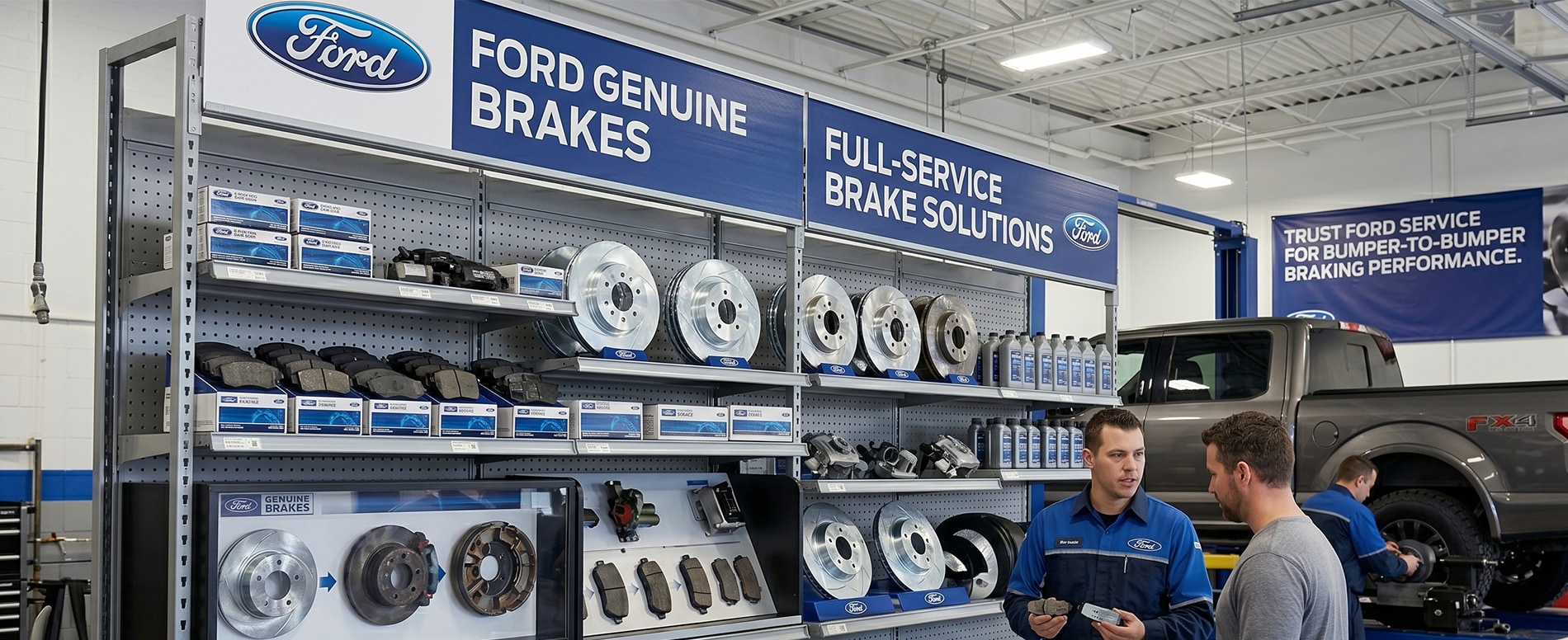
Most Ford brake pads last between 30,000 and 70,000 miles. That range is wide because brake life depends heavily on your vehicle, how you drive, and where you drive. An F-150 towing a camper through the Blue Ridge Mountains will chew through pads far faster than a Maverick commuting on flat highways.
| Ford Model | Expected Pad Life | Key Factor |
|---|---|---|
| F-150 | 30,000 - 50,000 mi | Towing & terrain |
| Super Duty | 25,000 - 45,000 mi | Payload & towing |
| Ranger | 35,000 - 55,000 mi | Off-road use |
| Maverick | 40,000 - 60,000 mi | City vs. highway |
| Explorer / Expedition | 35,000 - 55,000 mi | Passenger & towing |
| Escape | 40,000 - 65,000 mi | Stop-and-go driving |
| Bronco / Bronco Sport | 30,000 - 55,000 mi | Off-road & trail use |
| Mustang | 25,000 - 45,000 mi | Performance driving |
| Mach-E / Lightning | 50,000 - 80,000+ mi | Regen braking |
| Transit / E-Transit | 30,000 - 50,000 mi | Cargo & delivery stops |
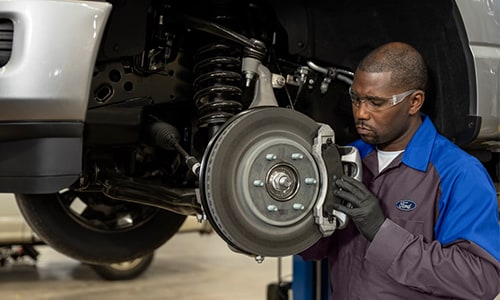
6 Warning Signs Your Ford Needs New Brakes
Brake pads don't fail overnight. They give you warning signs well before they become a safety issue.
1. Squealing or Squeaking
A high-pitched squeal when you brake is usually the wear indicator — a small metal tab built into the pad that contacts the rotor when the pad gets thin. It means you have roughly 2-3mm of material left.
2. Grinding Noise
Grinding means the pad material is completely worn and metal is contacting metal. This damages your rotors and dramatically increases repair cost. Schedule service immediately.
3. Vibrating or Pulsating Pedal
A brake pedal that vibrates or pulses typically means warped rotors. This is common in trucks and SUVs that tow or do frequent mountain driving — the heat from repeated hard braking causes the rotor surface to become uneven.
4. Vehicle Pulls to One Side
If your Ford pulls left or right when braking, one side may have a stuck caliper or unevenly worn pads. This can be dangerous in emergency stops, especially on wet mountain roads.
5. Longer Stopping Distance
If it takes noticeably more distance to stop, your pads may be worn thin or your brake fluid may need attention. This is especially critical for trucks that tow.
6. Brake Warning Light
Modern Ford vehicles monitor brake pad thickness and fluid levels electronically. If the brake warning light illuminates, don't ignore it. Some Fords also display a "Brake Pad Life Low" message.
What Affects Ford Brake Pad Life?
Driving Terrain
Mountain driving is the single biggest brake killer. Downhill roads like US-276, the Blue Ridge Parkway, or US-64 through the Nantahala Gorge mean constant braking that generates extreme heat.
Impact: Mountain driving can reduce brake life by 30-50%
Towing & Payload
Every additional pound requires more braking force. An F-150 towing a 10,000 lb camper needs substantially more stopping power than an empty one.
Impact: Regular towing can reduce brake life by 25-40%
Driving Style
Late, hard braking wears pads faster than gradual, early braking. Tailgating in stop-and-go traffic forces frequent hard stops.
Impact: Aggressive braking can reduce brake life by 20-30%
Pad Material
Ceramic pads last longer (40,000-70,000 miles) and run quieter. Semi-metallic pads wear faster (30,000-50,000 miles) but provide stronger stopping power under heavy loads.
Impact: Ceramic pads last 20-40% longer than semi-metallic
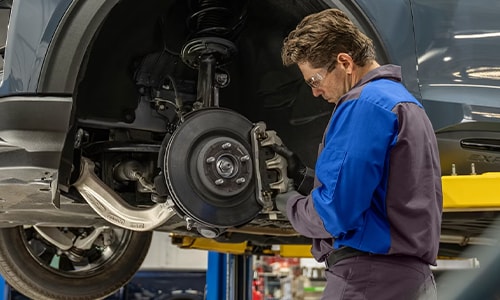
Ceramic vs. Semi-Metallic Brake Pads
This is one of the most common questions we hear at the service counter.
| Factor | Ceramic | Semi-Metallic |
|---|---|---|
| Lifespan | 40K - 70K mi | 30K - 50K mi |
| Noise | Very quiet | Slightly louder |
| Brake Dust | Minimal | More dust |
| Heavy-Load Stopping | Good | Superior |
| Cost | Higher upfront | Lower upfront |
| Best For | Daily commuting | Towing & off-road |
Our Recommendation
For most Ford owners in Western NC, we recommend ceramic pads for daily drivers (Escape, Explorer, Maverick) and semi-metallic pads for trucks that tow regularly (F-150 with trailer, Super Duty). The mountain terrain here puts extra demands on brakes, so choosing the right pad type makes a real difference.
How to Make Your Ford Brakes Last Longer
- Use engine braking on mountain descents — Shift to a lower gear on steep grades like US-276. This lets the engine slow the vehicle instead of riding the brakes.
- Maintain following distance — Keeping 3-4 seconds of space reduces hard stops. Anticipating slowdowns saves significant pad life.
- Don't ride the brakes — Resting your foot on the pedal causes constant pad-to-rotor contact, creating unnecessary heat and wear.
- Flush brake fluid every 30,000 miles — Brake fluid absorbs moisture over time, lowering its boiling point. Fresh fluid prevents brake fade on mountain roads.
- Reduce unnecessary weight — If you're not towing or hauling, keep your truck bed clear.
- Use trailer brakes when towing — Make sure your trailer brakes are properly adjusted so the trailer shares the braking load.
Ford EV Brakes: Why They Last Longer
If you drive a Mustang Mach-E, F-150 Lightning, or E-Transit, your brake pads will likely last 50,000 to 80,000+ miles. The reason is regenerative braking — the electric motor reverses to slow the vehicle and recharge the battery, handling most everyday deceleration without touching the friction brakes.
The trade-off? EV pads can develop surface rust or glazing from lack of use. Ford recommends periodic brake inspections on EVs to ensure pads and rotors stay in good condition.
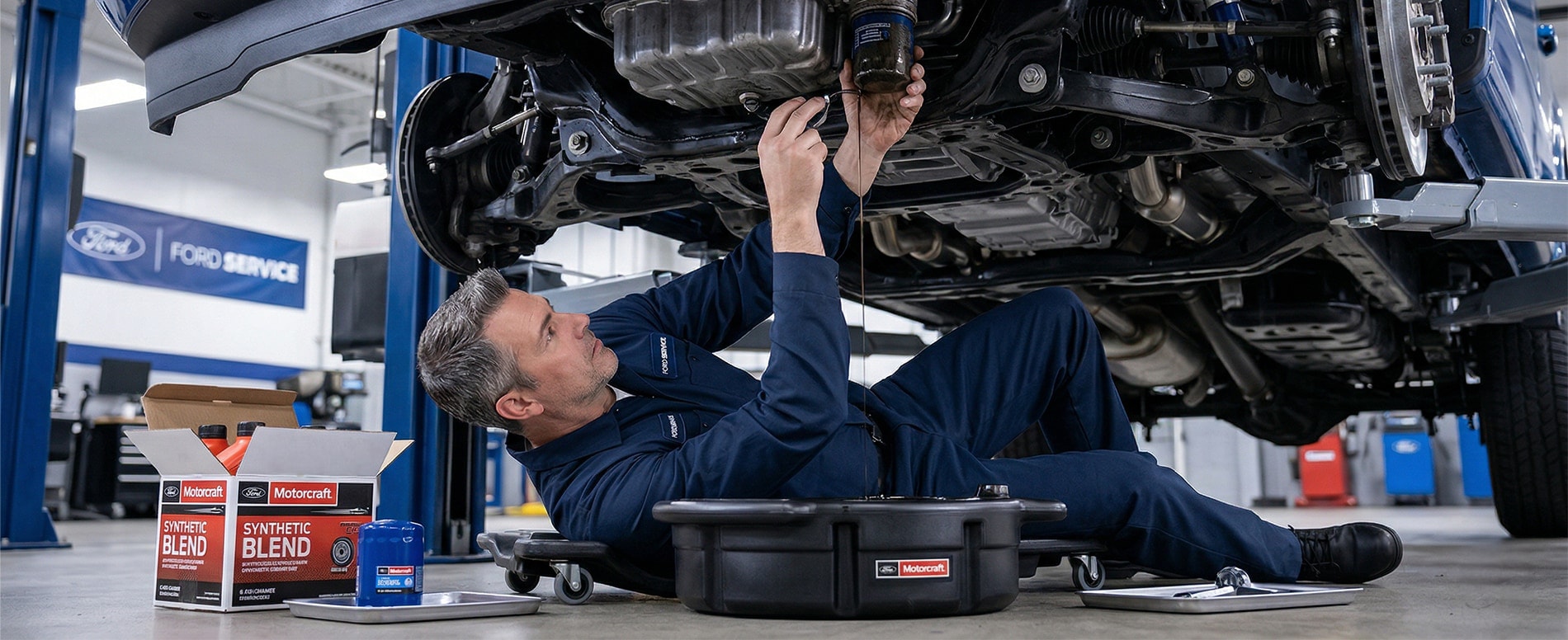
Brake Service at Mahon Ford
Every brake service at Mahon Ford is performed by Ford-trained technicians using OEM-spec parts. A complete brake inspection includes pad thickness measurement, rotor condition check, brake fluid testing, caliper verification, and brake line inspection.
We'll always tell you what you need now versus what can wait. If your pads have 4mm left heading into winter, we'll let you know you have time. If you're at 2mm and tow regularly on mountain roads, we'll recommend replacement before it damages your rotors.
Note on Pricing: Brake service cost varies by model and work required. Call 828-884-4151 for a precise estimate.
Frequently Asked Questions
How long do Ford brake pads last?
Ford brake pads typically last 30,000-70,000 miles depending on model, driving conditions, and pad material. Trucks used for towing or mountain driving may need replacement closer to 25,000-30,000 miles.
How do I know when my Ford needs new brakes?
Common signs include squealing or grinding noises, a pulsating brake pedal, the vehicle pulling to one side, longer stopping distance, and the brake warning light on your dashboard.
Do ceramic or semi-metallic pads last longer?
Ceramic pads generally last longer (40,000-70,000 vs. 30,000-50,000 miles) and produce less dust and noise. Semi-metallic pads provide better stopping power for trucks that tow.
Does towing wear out brakes faster?
Yes. Towing can cause brakes to wear 30-50% faster. Using engine braking on downhill grades helps extend pad life significantly.
How much does Ford brake service cost?
Cost varies by model and work needed. Call 828-884-4151 for a precise estimate for your Ford.
Should I replace all four brakes at once?
Front brakes handle 60-70% of stopping and wear faster. Always replace in pairs (both fronts or both rears) but you don't need all four at once unless they're all worn.
Ford Brake Guides by Model
For detailed specs and rotor sizes for your specific Ford:
F-150 Brakes
Super Duty Brakes
F-250 Brakes
F-350 Brakes
F-450 Brakes
F-550 Brakes
Ranger Brakes
Maverick Brakes
Explorer Brakes
Expedition Brakes
Escape Brakes
Bronco Brakes
Bronco Sport
Mustang Brakes
Mach-E Brakes
Lightning Brakes
Transit Brakes
E-Transit Brakes
More Ford Service Resources
Mahon Ford — proudly serving Brevard, Asheville, Hendersonville, Waynesville & Canton NC.
Created July 22, 2026 by MM Dealer Advocates
Categories:
Service