

Ford Transit Maintenance Schedule
Complete Service Intervals for EcoBoost & PFDi V6 Commercial Engines
Choose Your Transit Model Year
2027 Ford Transit
Coming soon
Ford Transit Scheduled Maintenance Overview
The 2026 Ford Transit is the backbone of commercial fleets across Western North Carolina and beyond. Whether your business runs a fleet of cargo vans on daily delivery routes, operates passenger shuttles near Hendersonville, or relies on a single Transit for mobile service calls, consistent maintenance is the single most effective way to minimize downtime and protect your investment. Ford engineered the Transit with durability and serviceability in mind, but even the most capable commercial vehicle requires regular, scheduled maintenance to perform at its best.
The 2026 Transit is available with two engine options: the 3.5L EcoBoost V6 twin-turbo engine producing 310 horsepower and 400 lb-ft of torque, and the 3.5L PFDi V6 naturally aspirated engine delivering 275 horsepower and 260 lb-ft of torque. Both engines are paired with a 10-speed SelectShift automatic transmission and utilize Ford's Intelligent Oil-Life Monitor (IOLM) system to calculate oil change intervals based on real-world driving conditions including engine load, ambient temperature, idle time, and trip length.
For fleet operators, understanding and following the Transit's maintenance schedule is critical. Commercial vehicles typically operate under conditions Ford classifies as "severe service" — stop-and-go delivery driving, extended idling, heavy payload operation, and frequent short trips. These conditions accelerate wear on engine oil, transmission fluid, brakes, and tires. Following the correct maintenance schedule keeps your Transit fleet on the road, reduces unexpected breakdowns, and helps control total cost of ownership. The service team at Mahon Ford of Brevard is equipped to handle individual Transit maintenance as well as fleet service programs for businesses throughout the region.
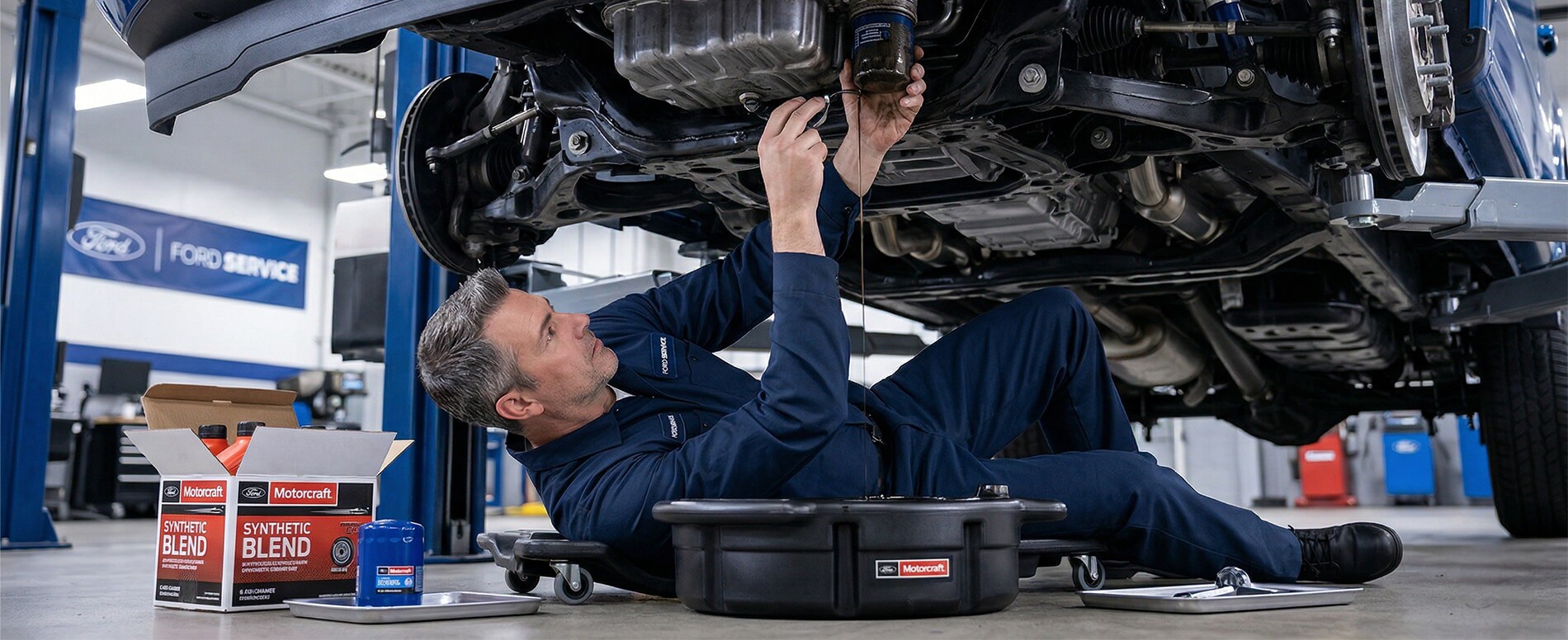
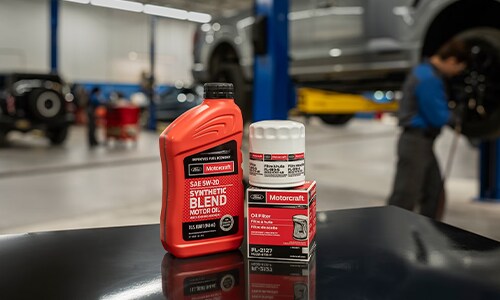
Oil & Filter Change
Every IOLM interval — up to 10,000 miles or 1 year, whichever comes first. Commercial use may trigger at 5,000-7,500 miles.
Tire Rotation
At every oil change interval. Fleet vehicles in stop-and-go delivery service should rotate every 5,000 miles for even wear.
Cabin Air Filter
Replace every 20,000 miles. Inspect sooner if operating in dusty environments or construction zones.
Spark Plugs
60,000 miles under severe conditions (EcoBoost) or 100,000 miles under normal driving for both engines.
Complete Maintenance Schedule by Mileage
The following table outlines every scheduled maintenance item for the 2026 Ford Transit based on Ford's recommended intervals. Commercial fleet operators should pay close attention to the severe-service notes, as most commercial Transit use qualifies as severe driving conditions.
| Mileage Interval | Service Items | Notes |
|---|---|---|
| Every Oil Change (7,500-10,000 mi typical) | Engine oil & filter replacement, tire rotation, multi-point inspection, brake inspection, fluid level checks (coolant, brake, power steering, washer), battery test, belt & hose inspection, exterior lights check | IOLM determines exact interval. Commercial stop-and-go use may trigger at 5,000-7,500 mi. Never exceed 10,000 miles or 1 year between oil changes. |
| 20,000 Miles | Cabin air filter replacement | Replace sooner if operating in dusty, construction, or high-pollen environments. Fleet vehicles in urban delivery may need replacement at 15,000 miles. |
| 30,000 Miles | Engine air filter replacement | Inspect at every oil change. Replace sooner if the filter is visibly dirty or if operating on unpaved roads or construction sites. |
| 60,000 Miles (Severe) | Spark plugs (EcoBoost severe use), transmission fluid change (severe/commercial), transfer case fluid change (AWD models, severe) | Severe conditions include stop-and-go delivery, heavy payload, extended idling, and mountain driving. Most commercial fleet Transits should follow this interval. |
| 100,000 Miles | Spark plugs (all engines, normal conditions), accessory drive belt inspection | Both the 3.5L EcoBoost and 3.5L PFDi V6 use Motorcraft SP-596 plugs (6 total). Inspect belt for cracking, fraying, or glazing. |
| 150,000 Miles | Transmission fluid change (normal conditions), accessory drive belt replacement | Uses MERCON ULV fluid. If the belt shows wear at 100,000-mile inspection, replace at that time rather than waiting. |
| 200,000 Miles | Initial engine coolant replacement | Ford's Motorcraft Orange Coolant is designed for extended life. After the initial replacement, change coolant every 100,000 miles or as indicated by testing. |
Time-Based Service Requirements
Brake fluid must be replaced every 3 years regardless of mileage. This is especially important for commercial fleet vehicles that may accumulate high brake usage without proportional mileage — delivery vans in stop-and-go service, for example, apply brakes far more frequently per mile than highway vehicles.
Fleet managers should also track service by engine hours and calendar time, not just odometer readings. Commercial Transits that spend significant time idling — service vans at job sites, shuttle buses at loading zones, delivery vehicles in traffic — degrade engine oil through heat cycling and moisture accumulation without adding miles to the odometer. If your Transit idles more than 20% of its operating time, consider scheduling oil changes on a time-based interval rather than relying solely on the IOLM.
Engine-Specific Maintenance Details
The 2026 Ford Transit offers two V6 engine options, each with specific maintenance requirements. Understanding the differences between the twin-turbo EcoBoost and the naturally aspirated PFDi engine helps ensure you use the correct parts and follow the right service intervals for your Transit.
| Specification | 3.5L EcoBoost V6 | 3.5L PFDi V6 |
|---|---|---|
| Power Output | 310 hp / 400 lb-ft (twin-turbo) | 275 hp / 260 lb-ft (naturally aspirated) |
| Oil Type | SAE 5W-30 Full Synthetic | SAE 5W-30 Full Synthetic |
| Oil Capacity | 6.0 qt (w/ filter) | 6.0 qt (w/ filter) |
| Oil Filter | Motorcraft FL-500S (spin-on) | Motorcraft FL-500S (spin-on) |
| Spark Plugs | Motorcraft SP-596 (x6) | Motorcraft SP-596 (x6) |
| Spark Plug Interval | 60,000 mi (severe) / 100,000 mi (normal) | 100,000 mi |
| Transmission | 10-speed SelectShift | 10-speed SelectShift |
Commercial Fleet Maintenance Considerations
Track maintenance by both mileage AND time for commercial fleet vehicles. High-idle Transits used for delivery, service calls, or shuttle operations can accumulate significant engine hours without proportional odometer readings. Oil degrades from heat and contamination even when the vehicle is stationary.
Stop-and-go delivery routes qualify as severe operating conditions. If your Transit fleet runs daily delivery schedules with frequent stops, short trips between deliveries, or operates in congested urban or suburban traffic, follow the severe maintenance schedule for oil changes, transmission fluid, and brake components.
Upfit vehicles require extra attention. Transits converted for ambulance, shuttle bus, mobile workshop, or refrigerated delivery service often carry added electrical loads from auxiliary equipment. These additional demands can increase strain on the battery, alternator, and belts — inspect these components more frequently than standard intervals suggest.
Standardize maintenance schedules across your fleet. Fleet operators managing multiple Transits benefit from setting uniform service intervals based on the most demanding vehicle in the fleet. This simplifies scheduling, reduces the chance of a vehicle being overlooked, and makes it easier to forecast maintenance costs and parts inventory.
Severe & Special Operating Conditions
Ford defines "severe" or "special" operating conditions as driving patterns that place additional stress on the engine, transmission, brakes, and drivetrain components. For commercial Ford Transits, many of these conditions are part of daily operations rather than occasional occurrences. If your Transit regularly operates under any of the following conditions, follow the severe maintenance schedule for all applicable service items.
- Frequent stop-and-go delivery routes
- Extended idling (common in delivery and service vans)
- Heavy payload operation near GVWR
- Mountain driving with steep grades (WNC terrain)
- Driving in dusty or construction-site conditions
- Extreme heat or cold temperatures
Normal vs. Severe Maintenance Intervals
The table below compares standard and severe maintenance intervals for the 2026 Ford Transit. Most commercial fleet vehicles should follow the severe column.
| Service Item | Normal Conditions | Severe / Commercial Conditions |
|---|---|---|
| Engine Oil & Filter | IOLM interval (7,500-10,000 mi) | IOLM interval (5,000-7,500 mi) |
| Spark Plugs (EcoBoost) | 100,000 miles | 60,000 miles |
| Transmission Fluid | 150,000 miles | 60,000 miles |
| Transfer Case Fluid (AWD) | 150,000 miles | 60,000 miles |
| Brake Fluid | Every 3 years | Every 2 years |
| Engine Air Filter | 30,000 miles | Inspect at 15,000 mi; replace as needed |
Western NC Mountain Driving
Commercial Transits operating in Western North Carolina face unique maintenance demands due to the region's mountainous terrain. Routes like US-276 through Pisgah National Forest, the Blue Ridge Parkway, and I-26 over the Saluda Grade involve sustained climbs and descents that place heavy stress on the transmission, brakes, and cooling system. Delivery routes serving mountain communities around Brevard, Hendersonville, and the surrounding valleys often include steep grades, sharp switchbacks, and significant elevation changes that are not reflected in simple mileage totals.
If your Transit fleet operates regularly in WNC mountain terrain, follow the severe service schedule for transmission fluid and brake components at a minimum. Frequent downhill braking accelerates brake pad and rotor wear, while sustained uphill climbs under load increase transmission operating temperatures. Consider scheduling transmission fluid changes at 60,000 miles and brake inspections at every oil change to catch wear before it leads to unscheduled downtime.

Monthly & Semi-Annual Owner Checks
Between scheduled service appointments, fleet operators and Transit owners should perform regular visual inspections and basic checks. These quick inspections help catch developing issues before they result in breakdowns or safety concerns. For fleet managers overseeing multiple vehicles, building these checks into a standard pre-trip or monthly inspection routine ensures nothing falls through the cracks.
Monthly Checks
Engine oil level, tire pressure (all 4 + spare if equipped), all lights & signals, washer fluid level
Every 6 Months
Battery terminals, coolant level, wiper blades, door seals & latches, parking brake operation
Annually
Safety warning lamps, seatbelt function, horn operation, exhaust system check
Before Winter
Coolant strength, battery test, tire tread depth, wiper blades, heater & defroster operation
Schedule Your Transit Maintenance at Mahon Ford
Mahon Ford of Brevard provides expert maintenance and repair services for the 2026 Ford Transit and the entire Ford commercial vehicle lineup. Our Ford-trained technicians understand the specific needs of commercial fleet vehicles and use genuine Motorcraft parts to ensure every service meets Ford's specifications. Whether you need a routine oil change, a complete severe-service maintenance package, or fleet-wide scheduling for multiple Transits, our service center at 1235 Asheville Hwy in Brevard, NC is equipped to keep your commercial vehicles running efficiently.
We proudly serve fleet operators and Transit owners throughout Western North Carolina, including Hendersonville, Asheville, Canton, and Waynesville. Our service department offers flexible scheduling to minimize your fleet's downtime, and our parts department stocks commonly needed Motorcraft filters, fluids, and components for the Transit to reduce wait times. Contact our service team at (828) 884-4151 or schedule your appointment online to keep your Transit fleet maintained, reliable, and road-ready.
Maintenance intervals listed on this page are based on Ford Motor Company's official 2026 Ford Transit scheduled maintenance guide and are provided for informational purposes. Actual service intervals may vary based on driving conditions, vehicle configuration, payload, and use case. Commercial and fleet vehicles operating under severe conditions may require more frequent service than the intervals shown. Always consult your owner's manual and the Intelligent Oil-Life Monitor (IOLM) system for vehicle-specific service reminders. Contact Mahon Ford of Brevard for maintenance recommendations tailored to your specific Transit and commercial application.
Created September 28, 2026 by MM Dealer Advocates